Bird Nest Boxes
Building songbird boxes is a simple, inexpensive way to attract songbirds to your property. This fact sheet discusses how to build, install, and maintain nest boxes successfully.
Why Build Songbird Boxes?
Properly constructed nest boxes can provide shelter in those areas negatively affected by urbanization and intensive management. By building boxes, you can insure the songbirds on your land have a place to nest.
Before You Begin...
Bird species have different habitat needs. To be successful, you must first choose the species you want to attract and understand its food, water, and space requirements. Use the table below to find the proper dimensions of the nest box for the birds you want to attract. By simply changing dimensions and entrance hole sizes, you can furnish cool, dry, durable, easily cleaned boxes for any of the small to medium-sized bird species in the table. Of course, you will want to make the entrance hole large enough for the type of bird you wish to nest in it. However, the hole needs to be ONLY THAT SIZE since larger holes invite predators (other birds, squirrels, etc.) to invade the box, either killing the chicks or taking over the box and evicting the previous residents.
Species |
House Floor (inches) |
House Depth (inches) |
Hole Above Floor(inches) |
Diameter of Hole |
Height above ground (feet) |
Bluebird |
5 x 5 |
8 |
6 |
1 ½ |
5-10 |
Carolina Chickadee |
4 x 4 |
8-10 |
6-8 |
1 1/8 |
6-15 |
Tufted Titmouse |
4 x 4 |
8-10 |
6-8 |
1 ¼ |
6-15 |
Nuthatches |
4 x 4 |
8-10 |
6-8 |
1 ¼ |
12-20 |
Carolina Wren |
4 x 4 |
6-8 |
4-6 |
1 ½ |
6-10 |
Great-crested Flycatcher |
6 x 6 |
8-10 |
6-8 |
2 |
8-20 |
Flicker |
7 x 7 |
16-18 |
14-16 |
2 ½ |
6-20 |
Red-headed Woodpecker |
6 x 6 |
12-15 |
9-12 |
2 |
12-20 |
Downy Woodpecker |
4 x 4 |
9-12 |
6-8 |
1 ¼ |
6-20 |
Screech Owl |
10-18 x 10-18 |
12-15 |
9-12 |
3 |
10-30 |
Materials for Songbird Boxes
To Build:
- Tape measure Hammer
- 1 1/2" to 1 3/4" galvanized nails
- Pencil or chalk for marking Saw Lumber
To Install:
- Stepladder or extension ladder
- 3" galvanized nails, lag bolts, or crimped wire
- Sheet metal for predator guard (see figure 2)
Helpful Construction Hints
- Boxes need at least four 1/4" holes in the bottom to allow water to drain.
- Several 1/4" holes in the sides will provide adequate ventilation.
- Use durable woods such as cedar, cypress, and pressure-treated pine.
- Allow for the width of the saw blade when marking and cutting a board.
- When using hardwood lumber, drill starter holes for the nails to avoid splitting boards.
- Avoid painting boxes or treating wood with a preservative. These boxes may absorb too much heat or give off toxic vapors.
- Hinge the roof or use a pivot nail on one side of the box to make periodic clean up easier.
Installation and Maintenance Tips
- Install all boxes by late March or early April.
- Place the boxes 200 to 300 feet apart to account for the territorial nature of most species.
- Firmly attach boxes to posts, trees, or buildings.
- On live trees, use crimped wire or lag bolts that can be loosened as the tree grows.
- Place boxes where they'll receive some shade during the day.
- Clean out all boxes each year after the young have fledged.
- Inspect boxes regularly and consider adding predator guards if necessary.
- Always work in teams when using folding or extension ladders!
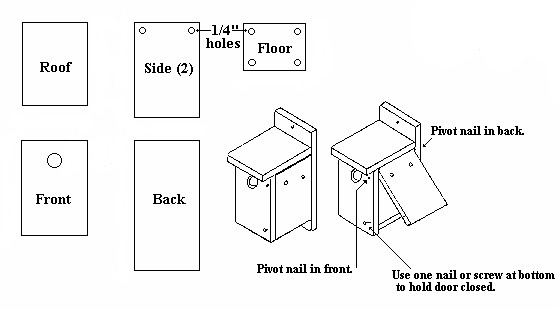
Figure 1. Nest Box Diagram
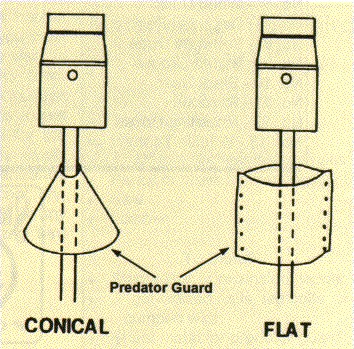
Figure 2. Examples of predator guards